Our top-tier consultancy services provide strategic guidance to elevate your entire digital presence.
Learn More


 " />
" />
 " />
" />
 Max
|
June 6, 2026
|
Blog
Max
|
June 6, 2026
|
Blog
Contents
A shopper in Penang opens a retail app, points their phone at an empty wall, and watches a sofa appear in their living room before they’ve spent a single ringgit. A property developer in Petaling Jaya gives buyers a full virtual walkthrough of a unit that hasn’t been built yet. These aren’t concepts from a tech conference — they’re happening right now, and the businesses making it work aren’t necessarily the biggest ones in the room.
If your brand is still relying purely on static images and video ads to drive decisions, it’s worth understanding how quickly that gap is widening.
The shift isn’t just technological — it’s behavioural. Malaysian consumers, particularly in the Klang Valley and Johor Bahru, are increasingly comfortable making significant purchases through digital channels. But comfort alone doesn’t close deals. Uncertainty does.
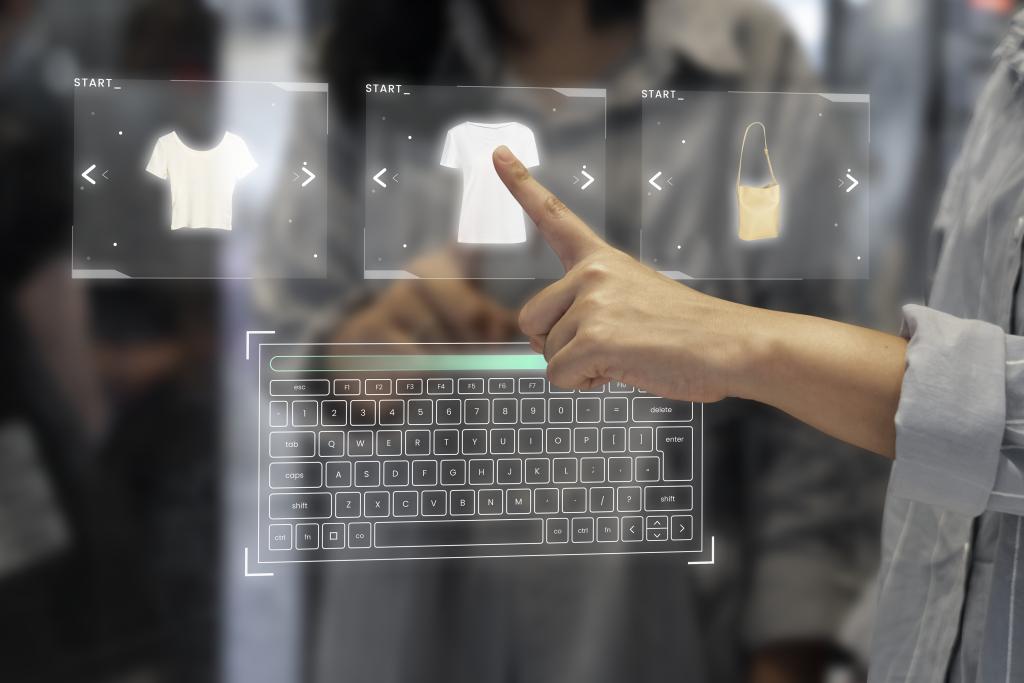
AR and VR marketing directly addresses the single biggest barrier to conversion: the inability to experience something before buying it. Whether it’s furniture, fashion, property, or beauty products, immersive technology lets customers answer their own questions without needing a salesperson. That self-serve confidence is what turns browsers into buyers.
MDEC has been actively supporting the growth of immersive tech adoption in Malaysia, and the ecosystem of local developers, platforms, and implementation partners has matured considerably. What once required a six-figure budget is now accessible to businesses working with a focused digital marketing agency that understands how to deploy these tools practically, not experimentally.
The categories gaining the most traction in Malaysia right now include property and real estate, retail and e-commerce, food and beverage experiences, and education and training. Each of these sectors shares one thing: a customer who needs to visualise before they commit.
The most common mistake is treating AR and VR as a novelty stunt rather than a conversion tool. A business invests in a flashy immersive experience for a trade fair in KL, gets a surge of foot traffic, and then has no mechanism to connect that experience to an actual purchase journey. The experience ends when the headset comes off.
The second mistake is building without a use-case brief. Teams get excited about the technology and commission development without asking the most important question first: what specific decision are we trying to help the customer make? An AR filter that lets someone “try on” a product has genuine commercial value. An AR experience that just shows your logo rotating in 3D does not.
Third — and this is particularly common among businesses working with generalist digital marketing services providers — is ignoring the surrounding infrastructure. An AR feature that lives on a slow-loading page, is buried three taps deep in an app, or has no retargeting sequence attached to it will underperform regardless of how impressive the experience itself is. The immersive moment is only one part of the customer journey.
The relationship between AI and AR/VR marketing has moved from theoretical to operational. AI is now doing three things that directly reduce the cost and complexity of deploying immersive experiences at scale.
First, AI-generated 3D models are dramatically cutting production time. What once required a specialist studio to produce can now be generated from standard product photography using machine learning tools. For a digital marketing agency Penang serving retail or property clients, this changes the economics of AR rollouts entirely.
Second, AI is enabling personalisation within immersive experiences. Rather than showing every user the same virtual room or product configuration, systems can now adapt the experience based on browsing history, purchase behaviour, or demographic signals. A returning customer sees a bedroom styled differently from a first-time visitor — without any manual intervention.
Third, AI-powered analytics are making it possible to measure immersive engagement in meaningful ways. Dwell time within an experience, interaction rates with specific product features, and drop-off points can all be tracked and used to optimise the experience continuously. This transforms AR and VR from a one-time campaign asset into an iterative performance channel — which is exactly how it should be treated.
Before committing budget, run through these readiness signals honestly:
If you can answer yes to most of these, the groundwork is already there. If several of these are uncertain, the more valuable first step is strengthening those foundations before adding a layer of immersive technology on top.
Malaysian businesses that approach AR and VR as a genuine conversion tool — rather than a novelty or a brand awareness exercise — are building a measurable advantage. The technology is accessible, the consumer appetite is real, and the gap between businesses using it well and businesses ignoring it is only going to widen. The question isn’t whether immersive marketing has a place in your strategy. It’s whether you build that capability now or spend next year catching up.
Disclaimer: Technology platforms, tools, and regulatory frameworks referenced in this article are subject to change. Seek current professional guidance before making implementation decisions.
353-3 Jalan C. Y. Choy,
10300 George Town,
Penang, Malaysia.
A-16-8 Tropicana Avenue,
No 12 Persiaran
Tropicana, PJU 3, 47410
Petaling Jaya, Selangor.

















 Singapore
 Australia