Our top-tier consultancy services provide strategic guidance to elevate your entire digital presence.
Learn More


 " />
" />
 " />
" />
 Max
|
June 3, 2026
|
Blog
Max
|
June 3, 2026
|
Blog
Contents
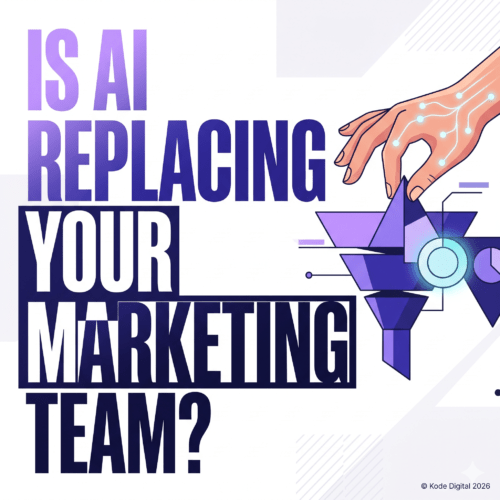
A growing number of businesses across the Klang Valley and Penang are quietly swapping out marketing staff for AI tools — and some are already regretting it. The question is no longer whether AI can handle marketing tasks. It clearly can handle many of them. The real question is whether removing human judgement from the equation actually produces better results, or just cheaper ones.
This post is for anyone running or overseeing a marketing function in Malaysia who wants an honest answer — not a vendor pitch, and not a panic-inducing headline.
The shift is real and it is happening faster than most organisations expected. Twelve months ago, most local businesses were experimenting with AI for copywriting or image generation. Today, teams are using it to automate entire workflows — keyword research, content briefs, ad copy variations, social scheduling, and reporting dashboards that used to take a full day each week.
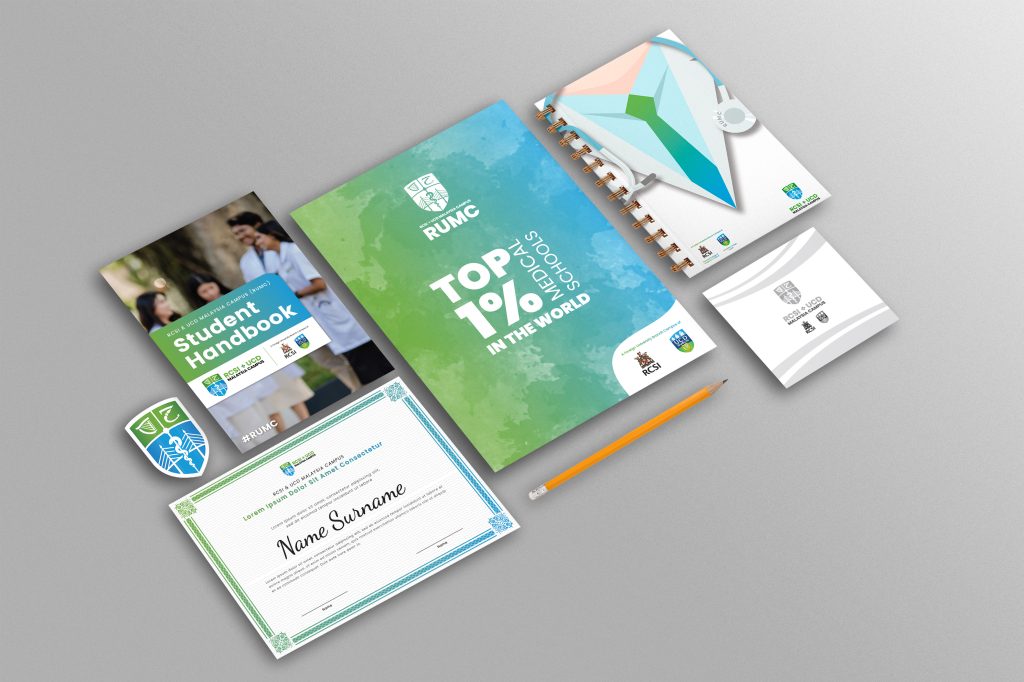
The education sector in Malaysia is a strong example of this. Institutions competing for student enrolments in a crowded digital space have begun using AI to generate localised content at scale, run personalised email sequences, and optimise landing pages continuously based on performance data. What took a team of four a full month can now be drafted, tested, and iterated in under a week.
Tools built around ai automation malaysia use cases are no longer experimental — they are being actively deployed by businesses that cannot afford to lose ground to faster-moving competitors. The technology is genuinely capable. The question is what it cannot do.
The most common mistake is treating AI as a one-for-one replacement for people, rather than a tool that amplifies what skilled people can achieve. This confusion leads to two predictable failure modes.
The first is over-automation. A business eliminates its content writer, points an AI tool at a list of keywords, and publishes whatever comes out. The output is grammatically correct, topically relevant, and completely devoid of any insight that a real customer in Johor Bahru or Petaling Jaya would find useful. Traffic might hold for a few months. Trust erodes quietly, then suddenly.
The second failure mode is under-adoption — businesses that dismiss AI entirely because the early outputs were mediocre. They watch competitors gain ground while insisting their human team is doing fine, even as campaign performance flattens and costs per lead climb.
Neither extreme serves you well. The businesses winning right now are the ones who have been honest about what AI genuinely handles better, and what still requires human expertise.
If you are trying to restructure how your team works alongside AI rather than against it, start here. This is not a technology audit — it is a marketing function audit.
This five-step process will not give you a perfect answer overnight, but it will clarify where your team’s time is most valuable and where AI can genuinely reduce the burden.
It is worth being specific here, because the impact on search and content is particularly significant for Malaysian businesses. The rise of ai seo malaysia tooling means that keyword research, content gap analysis, on-page optimisation recommendations, and technical audits can now be completed faster and with more granularity than any manual process allows.
For businesses investing in artificial intelligence for seo malaysia strategies, the competitive advantage is real — but only if the underlying strategy is sound. AI can tell you what topics to target and how to structure a page. It cannot tell you what your prospective customers in Klang Valley are genuinely worried about, what objection is stopping them from enquiring, or what tone makes them trust you over a competitor.
A capable digital marketing agency working in this space will use AI to accelerate the technical and operational work, then apply human expertise to the strategy, the messaging, and the creative decisions that actually move audiences. That combination consistently outperforms either approach in isolation.
Similarly, ai marketing platforms can now manage ad bidding, audience segmentation, and creative testing autonomously. But they optimise toward the objective you set. If you set the wrong objective — or if your landing page does not address what your audience actually needs — the AI will optimise you efficiently toward the wrong result.
Before changing how your team is structured or which tools you invest in, check for these internal signals.
If most of these apply, you are in a strong position to restructure toward a human-plus-AI model. If few of them apply, investing in your team’s fundamentals first will produce better returns than any AI tool.
No, AI is not going to replace your marketing team — not if your team is doing the work that actually matters. It will replace the parts of the role that were always mechanical, repetitive, and frankly not the best use of skilled people’s time. That is a reasonable outcome for everyone.
What it will do is raise the bar. Businesses that use AI intelligently will move faster, publish more, optimise continuously, and free up their people to focus on strategy, relationships, and creative thinking. Businesses that ignore it will find it increasingly difficult to compete on output volume and speed. And businesses that over-automate without maintaining quality will find their audience quietly drifting elsewhere.
The Malaysian market is competitive, digitally active, and increasingly sophisticated in what audiences expect from the brands they engage with. The businesses that thrive over the next few years will not be the ones with the most AI tools — they will be the ones who know exactly when to let the machine run, and when to put a human back in the seat.
Disclaimer: This article provides general guidance only and does not constitute professional marketing, legal, or regulatory advice. Businesses should seek qualified advice specific to their circumstances.
353-3 Jalan C. Y. Choy,
10300 George Town,
Penang, Malaysia.
A-16-8 Tropicana Avenue,
No 12 Persiaran
Tropicana, PJU 3, 47410
Petaling Jaya, Selangor.


















 Singapore
 Australia