Our top-tier consultancy services provide strategic guidance to elevate your entire digital presence.
Learn More


 " />
" />
 " />
" />
 Max
|
May 22, 2026
|
Blog
Max
|
May 22, 2026
|
Blog
Contents
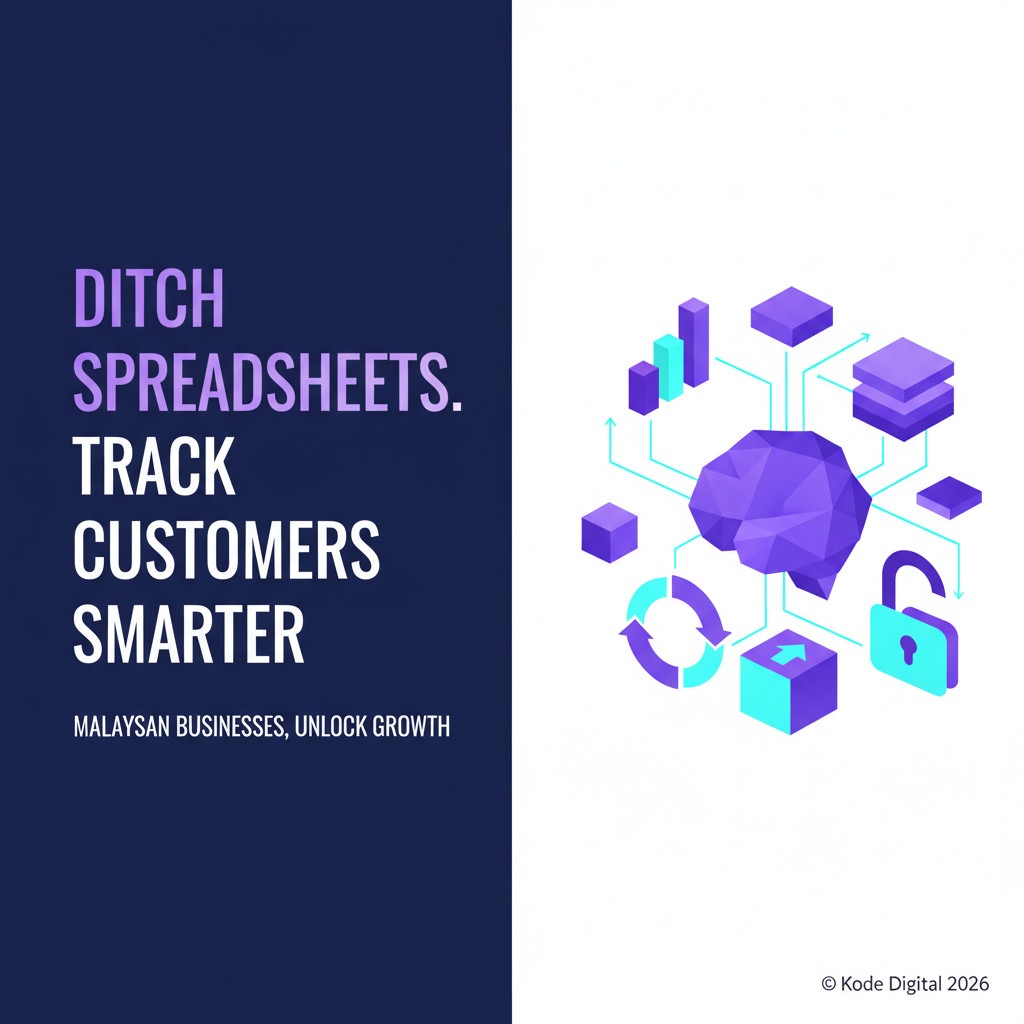
In the bustling commercial landscape of the Klang Valley, many Malaysian businesses, particularly those in the warehousing and logistics sector, find themselves at a critical juncture. They’ve long relied on familiar spreadsheets to manage customer data, orders, and interactions. While seemingly simple, this method often conceals a web of inefficiencies, leading to fragmented information, operational bottlenecks, and ultimately, missed growth opportunities. The good news? Moving beyond these digital ledgers is more straightforward than you might think.
Relying on spreadsheets for customer tracking might feel like a cost-effective solution initially, but the hidden expenses and inefficiencies quickly add up. For a warehousing business in Johor Bahru, for example, disjointed customer information can lead to significant operational headaches. Imagine a customer calling about a delivery, only for your team to cross-reference multiple spreadsheets – one for orders, another for delivery schedules, and yet another for contact details. This isn’t just frustrating for the customer; it’s a drain on your team’s productivity and precious time.
Data silos are perhaps the biggest culprit. When customer information lives in separate Excel files on different computers, it becomes almost impossible to get a unified view. This means sales, operations, and customer service teams might all be working with outdated or incomplete information. Errors multiply, leading to incorrect orders, delayed shipments, and dissatisfied customers. In an industry where precision and timeliness are paramount, these errors can directly impact your bottom line through rework, returns, and reputational damage.
Furthermore, manual tracking severely limits your ability to extract meaningful insights. You might have thousands of rows of data, but without sophisticated analysis, identifying trends, predicting customer needs, or personalising service becomes a daunting task. This directly impacts your growth potential. Missing out on upselling or cross-selling opportunities because you don’t have a clear picture of a customer’s purchasing history or preferences is a common occurrence. Additionally, regulatory compliance in Malaysia, such as accurate SST reporting for services, becomes significantly simpler with integrated systems rather than trying to reconcile disparate spreadsheet data.
Moving away from spreadsheets doesn’t have to be a daunting leap. By following a structured approach, Malaysian businesses can transition smoothly to more robust and efficient customer tracking systems. Here’s a practical, five-step framework:
While the benefits of transitioning from spreadsheets are clear, many Malaysian businesses stumble during implementation due to common pitfalls. Being aware of these can help you navigate the change more smoothly.
The advent of Artificial Intelligence (AI) is transforming how businesses in Malaysia approach customer data management, moving far beyond what any spreadsheet could ever achieve. AI-powered tools offer unprecedented capabilities to automate, analyse, and enhance every aspect of customer interaction, making smarter customer tracking a reality for even small and growing enterprises.
One of the most immediate impacts of AI is in data cleansing and enrichment. AI algorithms can swiftly identify and correct errors, remove duplicates, and standardise formats across vast datasets, tasks that are incredibly time-consuming and prone to human error when done manually. Furthermore, AI can enrich customer profiles by pulling in publicly available information, providing a more holistic view of your clients.
Predictive analytics is another game-changer. By analysing historical customer behaviour, AI can forecast future trends, such as which customers are most likely to churn, which products they might be interested in next, or their optimal reorder times. For a warehousing business, this means predicting peak seasons, managing inventory more effectively, and proactively reaching out to customers with relevant offers. This level of insight enables highly targeted outreach, supporting efforts of a digital marketing agency in crafting effective campaigns.
AI also excels in personalisation and automation. Chatbots and virtual assistants can handle routine customer enquiries 24/7, providing instant support and freeing up human agents for more complex issues. AI can analyse customer preferences and behaviours to automatically tailor communications, from personalised email campaigns to product recommendations, significantly improving customer engagement. This capability is invaluable for businesses looking to enhance their online presence, potentially even informing the content strategies an ai seo expert might develop for improved visibility.
For more advanced digital strategies, AI can help analyse customer sentiment from interactions, categorise feedback, and even suggest optimal pricing strategies. This intelligent automation and insight generation elevate customer data management from a reactive chore to a proactive, strategic advantage, enabling businesses to not just track customers, but to truly understand and serve them better. The insights gained can even feed into broader strategies, such as those implemented by an ai marketing specialist, ensuring your customer data is a living, breathing asset.
Deciding to move beyond spreadsheets is a significant step, but knowing whether your business in places like KL or Penang is truly ready can make all the difference for a successful transition. It’s not just about finding the right software; it’s about internal alignment and preparation.
Consider the following readiness signals:
If you can tick off most of these points, your Malaysian business is likely well-positioned to embark on a successful journey towards a more intelligent, integrated approach to customer tracking. The transformation awaits.
Embracing a modern approach to customer tracking is no longer a luxury but a strategic imperative for Malaysian businesses aiming for sustained growth and superior customer satisfaction. By shedding the limitations of spreadsheets and leveraging smart, integrated solutions, you can unlock a wealth of insights, streamline operations, and build stronger, more profitable relationships with your customers. The future of customer management is agile, data-driven, and within your reach.
Please note that this guide provides general information and does not constitute professional advice. Businesses should seek specific guidance for their unique circumstances.
353-3 Jalan C. Y. Choy,
10300 George Town,
Penang, Malaysia.
A-16-8 Tropicana Avenue,
No 12 Persiaran
Tropicana, PJU 3, 47410
Petaling Jaya, Selangor.





















 Singapore
 Australia