Our top-tier consultancy services provide strategic guidance to elevate your entire digital presence.
Learn More


 " />
" />
 " />
" />
 Max
|
May 19, 2026
|
Blog
Max
|
May 19, 2026
|
Blog
Contents
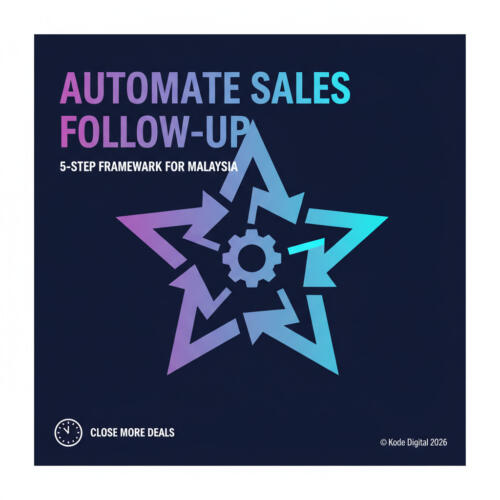
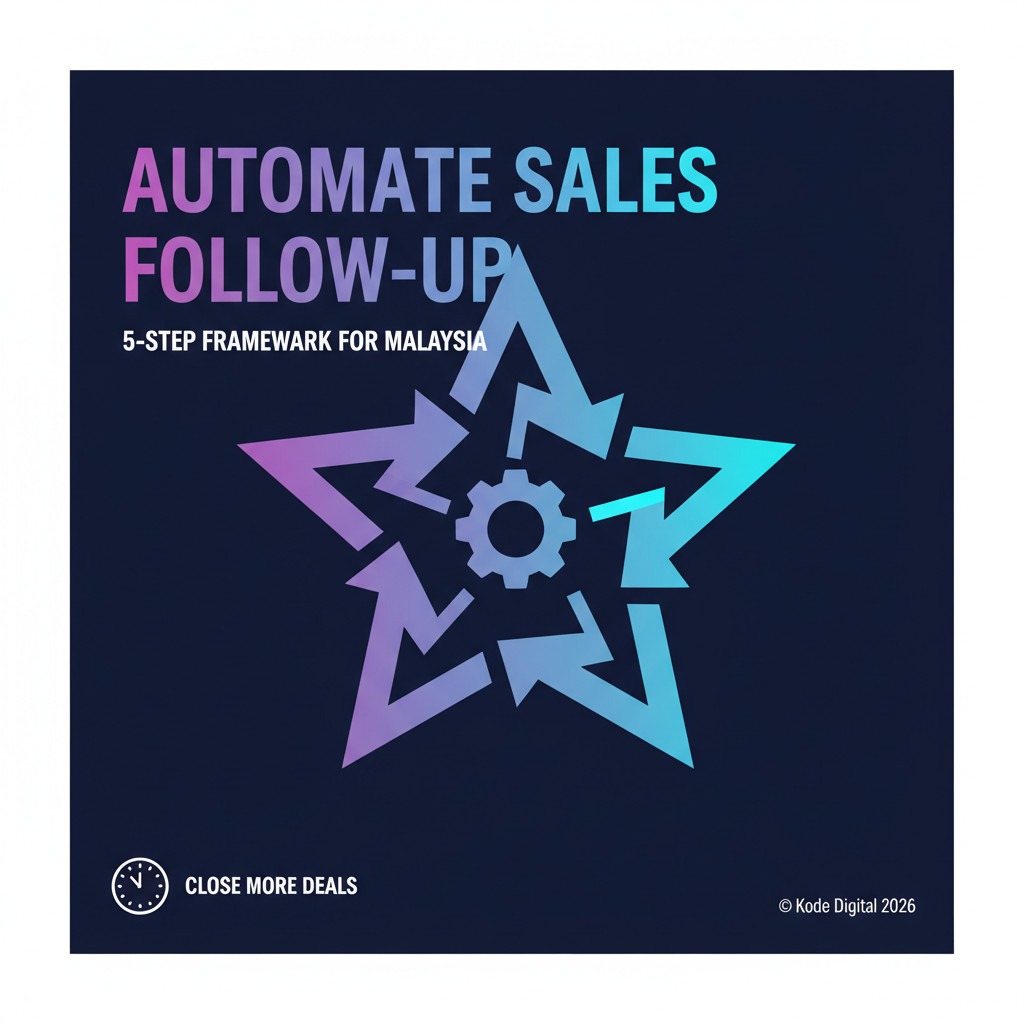
In the dynamic business landscape of Malaysia, a single missed follow-up can mean a lost opportunity, a client choosing a competitor, or a promising lead cooling off. Many Malaysian businesses, from bustling startups in Petaling Jaya to established enterprises in Johor Bahru, struggle to maintain consistent, personalised communication with every prospect. The sheer volume of enquiries can overwhelm even the most dedicated sales teams, leading to inconsistent nurturing and, ultimately, lower conversion rates.
Before you can automate, you must thoroughly understand what you’re automating. This critical first step involves meticulously mapping out your entire sales journey, from initial contact to post-sale check-ins. For Malaysian SMEs, this often means moving beyond a simple “lead” and “customer” status to recognise the nuances of local buying behaviours and decision cycles.
Start by documenting every stage a prospect moves through in your sales pipeline. Is it “Enquiry,” “Qualification,” “Proposal Sent,” “Negotiation,” “Closed Won,” or “Closed Lost”? For each stage, identify all the potential touchpoints – these are the interactions you have with your prospects. This could include initial email responses, follow-up calls after a demo, sending a personalised quote, or even a thank-you message after a meeting in Penang.
Consider the typical questions or concerns that arise at each stage. What information do your prospects need? What objections do they usually have? By understanding these interactions, you can tailor your automated follow-ups to be highly relevant and valuable. This groundwork ensures that when you implement automation, it doesn’t feel generic but genuinely supports your sales team and moves the prospect forward. It’s about building a robust framework that reflects your unique sales cycle, whether you’re selling digital services or tangible products.
Once your sales stages and touchpoints are clear, the next step is to create the content that will power your automated follow-up sequences. This isn’t just about drafting generic emails; it’s about developing targeted, valuable messages that resonate with your prospects at their specific stage in the buying journey. Think about the Malaysian consumer: are they looking for value, specific product details, testimonials from local users, or clear pricing in RM?
Segmentation is key here. A prospect who has just downloaded a brochure needs different information than one who has received a detailed proposal. Your content should reflect this.
Consider creating a library of follow-up assets, including:
Remember to keep the content conversational and focused on the prospect’s needs. Each piece of content should have a clear call to action, guiding them seamlessly to the next stage. This strategic approach to content creation is a cornerstone of effective automated sales follow-up.
With your sales process mapped and compelling content ready, it’s time to choose the right technology to bring it all to life. For Malaysian businesses, there’s a range of CRM and marketing automation platforms available, each with varying capabilities and price points. The goal is to select a system that integrates seamlessly with your existing tools and provides the functionality you need without unnecessary complexity.
When evaluating platforms, consider the following:
Once selected, meticulously configure your chosen platform. This involves setting up your workflows, uploading your content, defining your triggers and conditions, and ensuring all integrations are working correctly. Investing time in proper configuration now will save significant headaches later and ensure your automated sequences run smoothly. This is where a skilled digital marketing agency can provide invaluable guidance, ensuring the platform is tailored to your specific business needs.
After the careful planning and configuration in the previous steps, it’s time for implementation and, crucially, continuous optimisation. Launching your automated follow-up sequences is not a “set it and forget it” task; it’s an ongoing process of refinement and improvement.
The beauty of automation is the data it provides. Use this data to continually refine your process:
This iterative process ensures your automated sales follow-up remains highly effective, adapting to prospect behaviour and continuously improving your conversion rates.
The landscape of sales automation is rapidly evolving, with Artificial Intelligence (AI) playing an increasingly pivotal role. For Malaysian businesses looking to stay competitive, leveraging AI-powered tools can significantly enhance the effectiveness and efficiency of their automated sales follow-up.
Modern automation platforms often incorporate AI capabilities that go beyond simple scheduled emails:
While specific tools aren’t mentioned, platforms like HubSpot, Salesforce Sales Cloud, Zoho CRM, and ActiveCampaign are widely used and offer robust automation and AI features suitable for businesses of all sizes. Even smaller Malaysian SMEs can access more affordable solutions that provide core automation capabilities. Exploring how a sophisticated digital agency in Malaysia can integrate these tools for you could be a strategic move. This embrace of technology, especially AI, allows for a more intelligent, responsive, and effective sales follow-up process, pushing your business ahead in a competitive market.
Automating your sales follow-up process is more than just a convenience; it’s a strategic imperative for Malaysian businesses aiming for sustained growth and efficiency. By systematically defining your process, crafting targeted content, leveraging the right technology, and continuously optimising, you can transform your sales pipeline from a reactive system into a proactive, high-performing engine. This approach frees up your valuable sales team to focus on closing deals and building relationships, ensuring no promising lead falls through the cracks. The future of sales in Malaysia is automated, intelligent, and relentlessly focused on the customer journey.
Disclaimer: The information provided in this article is for general informational purposes only and does not constitute professional business, financial, or legal advice.
353-3 Jalan C. Y. Choy,
10300 George Town,
Penang, Malaysia.
A-16-8 Tropicana Avenue,
No 12 Persiaran
Tropicana, PJU 3, 47410
Petaling Jaya, Selangor.



















 Singapore
 Australia