Our top-tier consultancy services provide strategic guidance to elevate your entire digital presence.
Learn More


 " />
" />
 " />
" />
 Max
|
May 16, 2026
|
Blog
Max
|
May 16, 2026
|
Blog
Contents
In a rapidly evolving Malaysian market, capturing consumer attention has become more challenging than ever. Businesses in vibrant hubs like Klang Valley and Johor Bahru often struggle to differentiate their offerings, facing intense competition and the need for truly engaging experiences. How can a brand cut through the noise and create memorable interactions that resonate deeply with local consumers, driving both engagement and conversions?
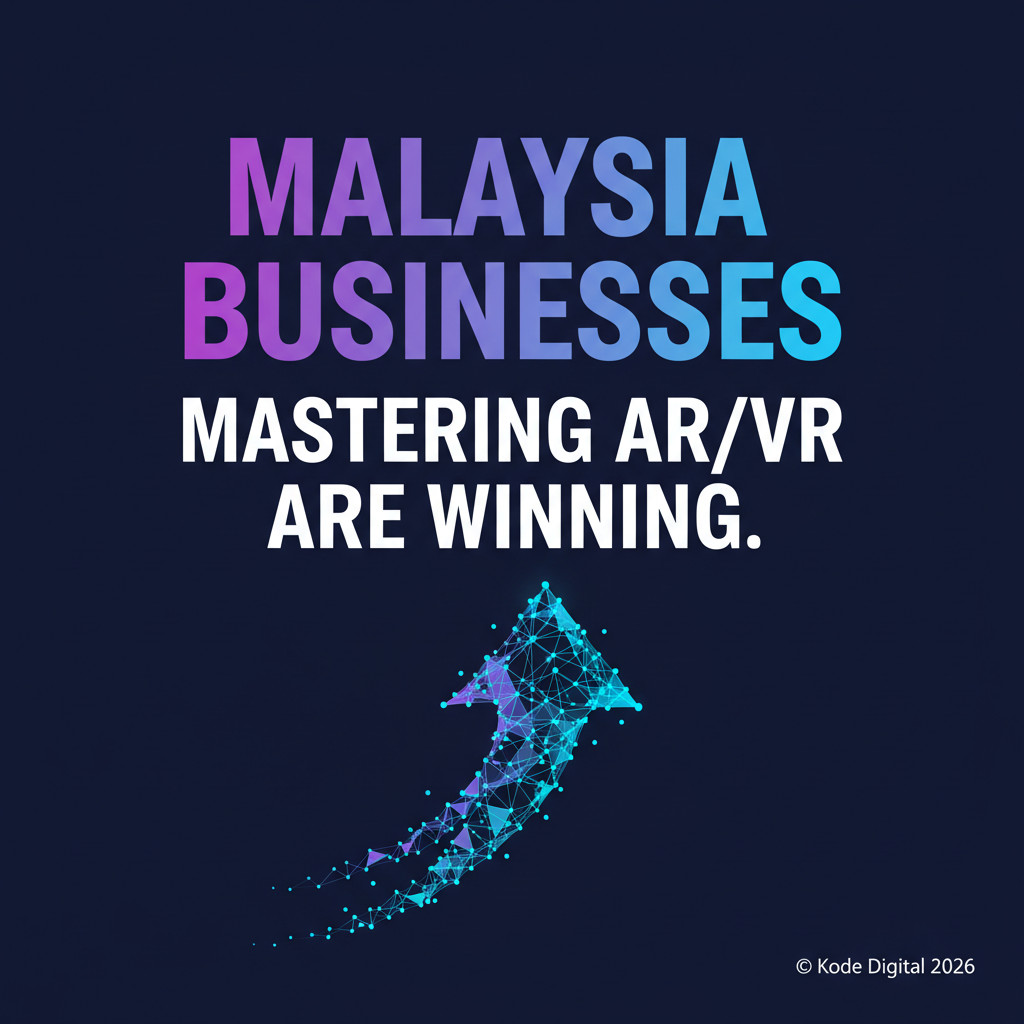
While many Malaysian SMEs are still exploring traditional digital channels, a select few are already tapping into the transformative power of Augmented Reality (AR) and Virtual Reality (VR) marketing. This isn’t just about futuristic gadgets; it’s about creating profound, interactive experiences that solve real business challenges – from product visualisation to brand storytelling. Imagine a local furniture retailer in Petaling Jaya allowing customers to “place” a new sofa in their living room via their smartphone before buying, or a property developer in Penang offering a virtual tour of an unbuilt condominium unit. These aren’t distant dreams; they’re current applications of AR/VR.
The hidden opportunity lies in delivering unparalleled customer engagement and a competitive edge. When consumers can interact with your brand in a novel, immersive way, it creates a deeper connection and a more memorable experience than static images or videos ever could. For local consumers, who are increasingly digitally savvy and expect innovation, AR/VR experiences offer a fresh and exciting reason to choose one brand over another. It allows brands to tell a richer story, demonstrate product utility more effectively, and build stronger emotional bonds, leading to higher recall and conversion rates.
Despite the clear advantages, many Malaysian businesses hesitate to dive into AR/VR marketing. This often stems from a few common misconceptions and pitfalls. Firstly, there’s the perception that AR/VR is prohibitively expensive, requiring massive upfront investment in custom hardware or software. While high-end VR setups can be costly, accessible AR experiences can be delivered via smartphones, leveraging existing consumer devices. Many businesses also lack understanding about where to even begin, seeing it as a complex technical endeavour rather than a strategic marketing tool. They might jump straight to developing a complex VR app without first defining clear marketing objectives or understanding their target audience’s digital behaviour.
Another significant pitfall is viewing AR/VR as a one-off gimmick rather than an integrated component of a broader digital marketing strategy. A common mistake is creating an AR filter simply because it’s trendy, without linking it to a clear brand message or call to action. Without strategic alignment, these efforts often fail to deliver tangible ROI. Furthermore, businesses might not possess the internal capabilities or know-how to execute such campaigns effectively, leading to reliance on generalist agencies that lack specialised immersive technology expertise. This often results in a sub-par experience that does little to impress local consumers or enhance brand perception.
To truly leverage AR/VR, Malaysian businesses need a mindset shift, viewing these technologies as powerful storytelling and utility tools rather than mere novelties. It’s about understanding how immersive experiences can solve specific customer pain points or enhance their journey. Here’s a strategic framework for shifting your thinking and planning your AR/VR marketing:
By adopting this structured approach, businesses can move beyond the hype and implement AR/VR solutions that deliver genuine value to Malaysian consumers and measurable results for their brand.
The convergence of Artificial Intelligence (AI) with AR/VR is creating unprecedented opportunities, making immersive marketing more accessible, personalised, and powerful. AI tools are fundamentally changing how AR/VR content is created, delivered, and optimised. For instance, generative AI can now rapidly create 3D assets and environments, drastically cutting down the development time and cost for AR filters or VR experiences. This means that even a digital agency in Malaysia can offer more sophisticated immersive solutions without a prohibitive budget.
AI-driven analytics can also provide deeper insights into user behaviour within AR/VR environments. Imagine AI analysing how a customer interacts with a virtual product in a showroom, identifying which features they focused on, their emotional responses, and potential pain points. This data allows for hyper-personalisation, where AR/VR experiences can dynamically adapt to individual user preferences in real-time. Furthermore, AI-powered chatbots integrated into AR/VR applications can provide instant, intelligent support, guiding users through virtual environments or answering product queries, enhancing the overall customer journey. This synergy simplifies complex development, enhances user experience, and provides actionable data, making AR/VR marketing more efficient and impactful. For companies keen on future-proofing their strategy, incorporating AI marketing alongside their AR/VR plans is becoming essential.
Embracing AR/VR marketing is a journey, not a sprint. For Malaysian businesses looking to truly master this space, a strategic 12-month roadmap is crucial.
By following such a roadmap, Malaysian businesses can strategically build their capabilities in AR/VR marketing, moving from initial experimentation to becoming a leader in immersive brand experiences.
The landscape of marketing in Malaysia is evolving, and AR/VR is no longer a distant fantasy but a tangible, impactful strategy for those willing to innovate. By embracing this immersive future with a clear strategy and a willingness to adapt, Malaysian businesses can unlock new levels of customer engagement, build stronger brands, and ultimately drive significant growth. The time to explore the power of AR/VR is now, positioning your brand at the forefront of the next wave of digital interaction for local consumers.
Disclaimer: This content is for informational purposes only and not legal advice. Businesses should ensure compliance with all relevant local regulations and data privacy laws.
353-3 Jalan C. Y. Choy,
10300 George Town,
Penang, Malaysia.
A-16-8 Tropicana Avenue,
No 12 Persiaran
Tropicana, PJU 3, 47410
Petaling Jaya, Selangor.















 Singapore
 Australia