Our top-tier consultancy services provide strategic guidance to elevate your entire digital presence.
Learn More


 " />
" />
 " />
" />
 Max
|
September 7, 2026
|
Blog
Max
|
September 7, 2026
|
Blog
Contents
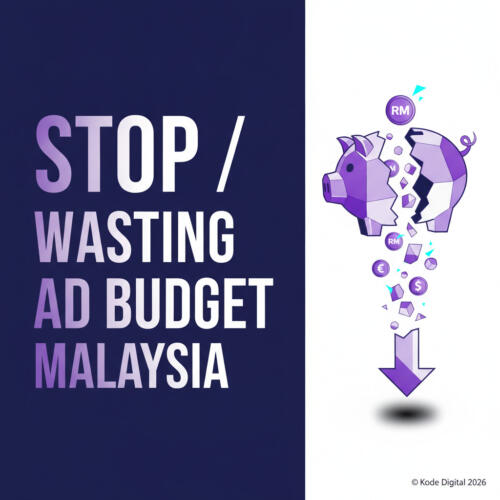
Here’s a conversation that happens far too often in Petaling Jaya, Penang, and Johor Bahru. A business owner signs up for a bundle of digital marketing services — social media management, email blasts, maybe a Google Ads campaign — spends RM 3,000 to RM 8,000 a month, and after six months, genuinely cannot tell you what they got for it. No clearer picture of leads. No measurable uptick in enquiries. Just a stack of monthly reports full of impressions and reach figures that don’t translate to anything real.
This isn’t a story about bad agencies. It’s a story about mismatched services. Malaysian industrial suppliers, in particular, tend to get sold a consumer-brand playbook when what they actually need looks nothing like that. So before your business spends another ringgit, let’s cut through the noise.
Digital marketing services work best when they’re chosen based on your buyer’s actual journey — not packaged together to look comprehensive on a proposal. A digital marketing agency worth working with will tell you this upfront. Most won’t, because selling a bundle is easier than diagnosing a problem.
Think about what an industrial supplier’s buyer actually does before making a purchase decision. They’re not scrolling Instagram at midnight getting inspired by your products. They’re searching Google for a specific specification, reading a technical article, or asking a peer in their industry for a recommendation. That’s a fundamentally different behaviour pattern from a retail consumer — and it demands a fundamentally different digital approach.
So the myth worth busting here is this: that running every available channel simultaneously is the same as having a strategy. It isn’t. Spreading budget across six tactics with no clear buyer journey behind them produces mediocre results across the board instead of meaningful traction anywhere.
The most common reason a business ends up with the wrong digital marketing mix is simple: they started with what they’d heard of, not what they needed. Social media has enormous name recognition. Paid ads feel fast. Influencer marketing sounds exciting. These are all legitimate tools — but they’re not automatically the right tools for every business.
A manufacturing supplier in Johor Bahru whose customers are procurement teams at factories doesn’t need a viral TikTok strategy. What they need is to show up when those procurement teams search for exactly what they supply. Working with a proper agency for digital marketing means having that conversation honestly at the start, not six months in when the budget has already been spent.
AI is reshaping how this diagnosis gets done, which is worth understanding. Modern AI marketing tools can now analyse search intent patterns, competitor gaps, and audience behaviour at a speed and granularity that was impractical even three years ago. A credible digital agency in Malaysia should be using these tools to inform channel selection — not just to automate content production.
If a provider can’t answer these cleanly, that’s useful information.
For most B2B and industrial businesses operating in Malaysia, the effective baseline tends to involve three layers — and notably, some of the most heavily promoted services don’t appear in any of them until later.
Layer one is discoverability. This is predominantly an SEO problem. Whether it’s SEO services targeting buyers searching in KL, or ensuring your product pages are technically sound and search-engine readable, this is the foundation. Without it, every other tactic operates at a disadvantage because you’re paying to bring people to a door that isn’t visible.
Layer two is credibility. Once someone finds you, what do they find? A website that loads slowly, has unclear navigation, and offers little technical detail loses qualified buyers instantly. This is where web infrastructure and content quality do their work quietly. It’s less glamorous than a paid campaign but it determines whether any of your marketing actually converts.
Layer three is reach — but only once layers one and two are solid. This is where paid search, retargeting, or even selective social channels might enter the picture. A digital marketing company that recommends layer three before layers one and two are functional is optimising for their own reporting metrics, not your business outcomes.
A marketing agency relationship works when both sides are aligned on what success looks like before any work starts. That alignment is rarer than it should be. Part of the problem is that digital marketing services are often sold on deliverables — posts published, ads run, reports sent — rather than on outcomes. Deliverables are easy to produce. Outcomes require accountability.
Malaysian SMEs, particularly those supported under frameworks like SME Corp, are increasingly expected to demonstrate digital capability as part of broader growth plans. That creates pressure to “do digital marketing” as a checkbox rather than as a genuinely useful business function. The businesses pulling ahead aren’t necessarily the ones spending the most — they’re the ones who’ve matched the right services to the right stage of their own growth.
One practical reframe that helps: instead of asking “what digital marketing services should we be doing?”, ask “where in our buyer’s journey are we currently losing people?” The answer to that second question will tell you exactly where to focus first.
The businesses in Klang Valley and Penang that are consistently generating qualified leads through digital channels didn’t get there by buying the biggest package available. They got there by being ruthlessly specific about what their buyers actually do — and building a digital presence that meets those buyers at the right moment, with the right information, on the right platform. That’s not complicated in principle. It just requires someone willing to have an honest conversation about it before the contract is signed.
Disclaimer: Digital marketing regulations and platform policies are subject to change. Always verify current guidelines with relevant Malaysian authorities and platform providers before implementation.
353-3 Jalan C. Y. Choy,
10300 George Town,
Penang, Malaysia.
A-16-8 Tropicana Avenue,
No 12 Persiaran
Tropicana, PJU 3, 47410
Petaling Jaya, Selangor.




















 Singapore
 Australia