Our top-tier consultancy services provide strategic guidance to elevate your entire digital presence.
Learn More


 " />
" />
 " />
" />
 Max
|
October 12, 2026
|
Blog
Max
|
October 12, 2026
|
Blog
Contents
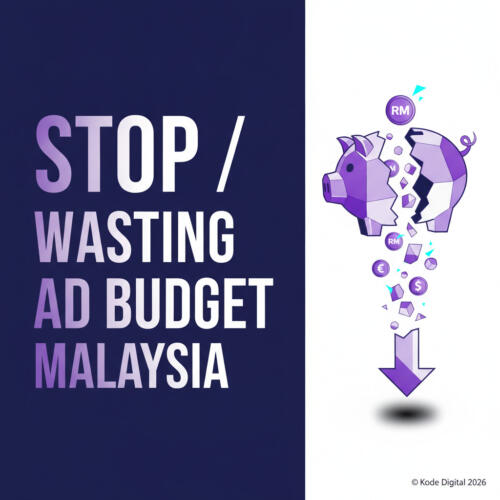
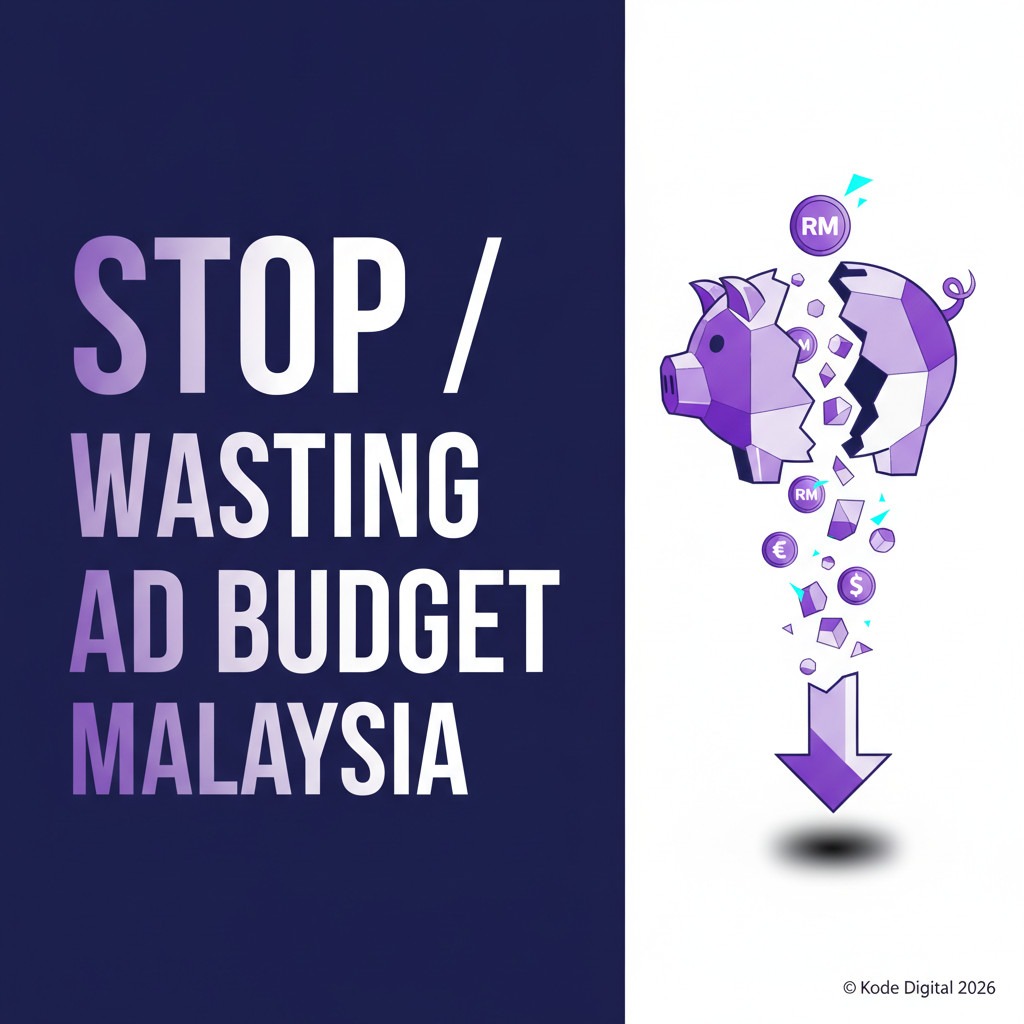
A Klang Valley retailer spends RM 8,000 on Google Ads over three months. The dashboard shows thousands of clicks. The business owner feels confident — until they realise almost none of those clicks converted into actual enquiries or sales. Sound familiar? This is not a rare edge case. It is one of the most consistent patterns seen across Malaysian SMEs running paid search campaigns without a structured strategy behind them.
Pay-per-click advertising can be one of the fastest ways to generate leads. It can also be one of the fastest ways to burn cash on an audience that was never going to buy from you. The difference usually comes down to a handful of avoidable decisions that most businesses do not realise they are making.
Most business owners judge their PPC performance by the metrics platforms show them by default — impressions, clicks, and cost-per-click. These numbers look meaningful. They often are not. The real damage happens in the gaps: who is clicking, what they were actually searching for, and what happened after they landed on the page.
When you target broad match keywords without a tightly managed negative keyword list, your ads can appear for searches that have almost nothing to do with your business. A Johor Bahru logistics company targeting “delivery services” on broad match might find their ads shown to people searching for food delivery apps or courier tracking for personal parcels. Every one of those clicks costs money. None of them were buyers.
This is consistently underestimated. A prospect clicks your ad expecting exactly what the ad promised, lands on a generic homepage, and leaves within ten seconds. The click cost has been paid. The conversion never had a chance. Landing pages for paid campaigns need to be tightly aligned to the specific ad group — same message, same offer, same audience intent. A homepage almost never qualifies.
The search terms report inside Google Ads shows you exactly what queries triggered your ads. Many Malaysian advertisers either do not know it exists or check it so rarely it becomes useless. Reviewing this weekly and blocking irrelevant searches is not optional maintenance — it is where real budget protection happens.
On Meta platforms, including those managed through Meta Business Suite, the audience configuration is where most local campaigns quietly fall apart. Business owners often build audiences that are either far too broad — essentially targeting the entire country with no behavioural filters — or so narrow that the algorithm cannot optimise properly due to insufficient data.
Neither extreme works. A Penang F&B brand targeting “everyone in Malaysia aged 18–65 who likes food” is competing for the same inventory as national chains with ten times the budget. That same brand targeting only people who visited their website in the last seven days might have an audience of 200, which is not enough for the algorithm to find patterns.
The sweet spot is layered targeting — combining location (Penang, Petaling Jaya, specific postcodes), behavioural signals, and custom audience lists built from real customer data. This is where working with an experienced agency for digital marketing often pays for itself, because building these audience architectures correctly from the start prevents weeks of wasted spend on misaligned segments.
Google’s Performance Max campaigns and Meta’s Advantage+ placements have introduced machine learning into the core of paid advertising. The platforms are increasingly making decisions about who sees your ads, when, and at what bid. This is not inherently bad — AI can find patterns in audience behaviour that no human analyst could identify at speed. But it creates a specific risk for Malaysian advertisers: the algorithm optimises toward the goal you set, not necessarily the goal you actually want.
If your conversion event is set to “page views” because you have not configured proper conversion tracking, the AI will enthusiastically drive page views. If your conversion is set to “add to cart” but your real goal is completed purchases, you will get a lot of abandoned carts optimised at scale. Businesses using ai marketing tools through these platforms need to configure the input signals correctly, otherwise the machine learning amplifies the wrong behaviour rather than correcting it.
Human oversight remains essential: reviewing asset performance, pausing underperforming ad variations, and ensuring conversion tracking is tied to a meaningful business outcome rather than a vanity metric.
There is no universal template, but there are structural principles that consistently separate campaigns that generate returns from those that drain budgets quietly month after month.
Some businesses discover during this audit process that their organic search presence needs reinforcing alongside paid efforts. An seo agency can help reduce long-term reliance on paid clicks by building keyword authority that compounds over time — a useful parallel investment, particularly for businesses in competitive sectors across KL and the Klang Valley.
Scaling a PPC campaign that has structural problems does not fix those problems — it makes them more expensive. A RM 3,000 monthly campaign bleeding 40% of its budget on irrelevant traffic becomes a RM 12,000 monthly campaign bleeding RM 4,800 the moment you increase spend without addressing the root causes first.
The businesses that get the most from paid advertising in Malaysia are not necessarily those with the largest budgets. They are the ones who treat campaign management as an ongoing discipline rather than a set-and-forget exercise. They review performance weekly. They ask uncomfortable questions about where the money is actually going. And they make changes based on data rather than assumptions.
As platforms become more automated and AI takes on more of the bidding and placement decisions, the advertiser’s role shifts — from managing individual bids to managing the quality of inputs, the accuracy of goals, and the integrity of the data flowing into those systems. The businesses that understand this shift are the ones that will continue finding PPC profitable in 2026 and beyond. Those that do not will keep seeing impressive click numbers and wondering where the revenue went.
Disclaimer: Campaign performance varies based on industry, budget, and market conditions. Consult a qualified digital advertising professional before making significant changes to your paid media strategy.
353-3 Jalan C. Y. Choy,
10300 George Town,
Penang, Malaysia.
A-16-8 Tropicana Avenue,
No 12 Persiaran
Tropicana, PJU 3, 47410
Petaling Jaya, Selangor.




















 Singapore
 Australia