Our top-tier consultancy services provide strategic guidance to elevate your entire digital presence.
Learn More


 " />
" />
 " />
" />
 Max
|
July 6, 2026
|
Blog
Max
|
July 6, 2026
|
Blog
Contents
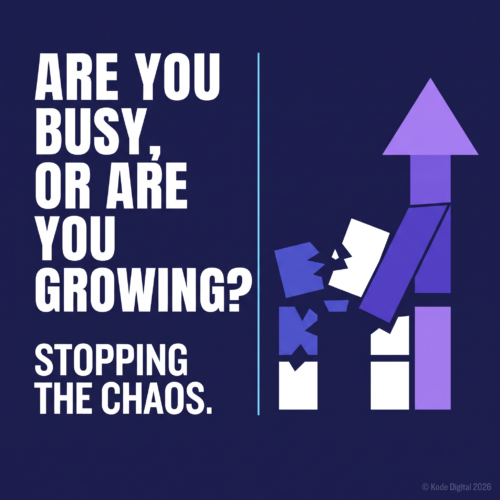
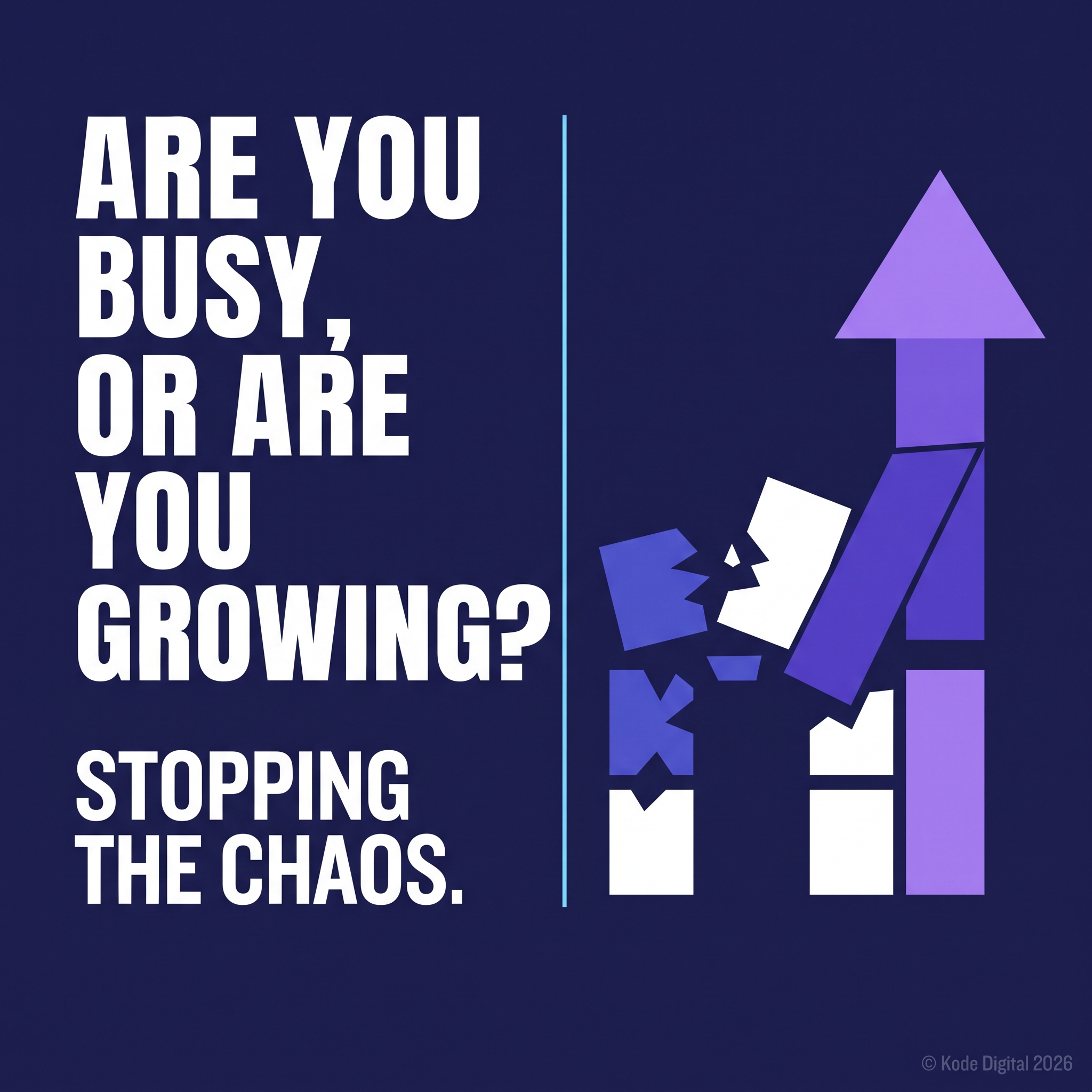
Here is something most business owners in the Klang Valley quietly suspect but rarely say out loud: the people they hired to grow the business are spending the majority of their week doing things that have nothing to do with growth.
Not because they are lazy. Not because they do not care. But because the way most Malaysian SMEs structure their marketing function means the person responsible for campaigns, content, and audience engagement is also the person chasing invoice approvals, updating spreadsheets, scheduling meeting rooms, and reformatting reports for the third time this month.
If your marketing output feels stuck despite having a team in place, this is almost certainly the root cause. Here is how to diagnose it, fix it, and make sure it stays fixed.
When a marketing professional’s calendar is genuinely examined hour by hour, the results are usually uncomfortable. Research across comparable SME markets consistently shows that marketing staff spend less than half their contracted hours on actual marketing activity. The rest disappears into operational support tasks that nobody explicitly assigned but everyone quietly expects.
In practice, this looks like:
None of these tasks are worthless. But when they land on the marketing team by default, they consume the precise hours that should be going toward building campaigns, testing audiences, refining messaging, and actually driving pipeline.
The diagnostic step here is simple. Ask every person in your marketing function to log their actual activity for two working weeks — not what they are supposed to be doing, but what they are genuinely spending time on. The output will tell you more than any performance review.
Malaysian businesses — particularly those operating out of Petaling Jaya, Johor Bahru, and Penang’s commercial zones — often run lean teams where individual roles carry overlapping responsibilities by design. This works reasonably well in operations, logistics, and finance, where tasks are repeatable and process-driven.
It does not work in marketing. The nature of effective marketing requires focused, uninterrupted creative and strategic time. A campaign strategist who gets pulled into three operational queries before 11am will not produce the same quality of work as one who has protected blocks for deep work. The cognitive cost of context-switching is real, and it compounds daily.
There is also a cultural dimension worth naming honestly. In many Malaysian workplaces, being visibly busy with any task — regardless of whether that task connects to the role’s core function — is socially rewarded. A marketing executive who is clearly “helpful” across the business can look like a high performer while quietly underdelivering on the function they were hired for. This is not a character flaw; it is an organisational design flaw.
Fixing this does not require restructuring the entire business. It requires three concrete interventions applied in sequence.
Write down, explicitly, what your marketing function is responsible for producing. Not vaguely (“brand awareness”) but specifically: how many campaigns per quarter, which channels, what content volume, which metrics they own and are accountable to. When the role has clear outputs, it becomes much easier to identify which tasks are pulling the team away from those outputs.
Using the two-week time log, categorise every task into one of three buckets: core marketing activity, shared business operations, or pure admin. Any task in the second or third bucket that is consuming more than two hours per week needs to be either automated, delegated to an operations or admin resource, or eliminated entirely.
This is where modern tools make a genuine difference. Automation platforms can handle recurring report generation. AI-assisted tools — now widely accessible and increasingly used by forward-thinking digital marketing services teams across Malaysia — can draft, schedule, and analyse content at a fraction of the manual effort previously required. A task that once took a full morning can genuinely be reduced to a 20-minute review. This is not about replacing people; it is about returning their time to work that actually requires human judgement and creativity.
Time recovered from admin will not automatically flow into high-value marketing work unless there is a structure that defends it. Block mornings for deep creative and strategic work. Batch meetings into specific windows. Introduce a simple escalation rule: if a task request is not directly connected to an active marketing deliverable, it gets triaged before it enters the team’s queue.
There is a point in this process where some businesses discover that even after clearing the admin burden, the in-house team still lacks the specialist depth to execute at the level the business needs. This is particularly common in areas like paid media strategy, technical SEO, and performance analytics, where the skill set is highly specialised and the learning curve is steep.
This is where a well-chosen digital marketing agency adds disproportionate value — not to replace the internal team, but to handle execution in domains where depth matters and generalist effort produces diminishing returns. An experienced agency for digital marketing brings ready-built systems, tested frameworks, and specialists who work in these areas every single day. The internal team, freed from admin and from trying to be expert in ten disciplines simultaneously, can focus on strategy, brand voice, and the commercial context only they fully understand.
A credible digital marketing company will not try to take over everything. The better ones will be clear about what they do, what they expect from the client’s internal team, and how the two functions work together without overlap or confusion. If you are evaluating options, that clarity in the initial conversation is itself a useful signal about how they operate.
Working with a reputable digital marketing agency Malaysia businesses actually trust means looking for demonstrable results over polished pitch decks — and ensuring your own team has the bandwidth to brief, review, and collaborate properly, which brings the whole conversation full circle.
Forget measuring how busy your marketing team looks. Start measuring what they produce. Campaign output volume. Content published and distributed. Leads generated per channel. Cost per acquisition trends over time. Audience growth rates. These are the numbers that tell you whether the function is working.
When those numbers are flat or declining despite a team that appears occupied, the answer is almost never “hire more people.” It is almost always “remove the friction that is preventing the people you already have from doing the work they were hired for.”
Malaysian businesses that act on this now — before the next planning cycle, not after it — tend to find that their existing team is considerably more capable than their recent output suggested. The talent was always there. It was just buried under the wrong work.
Disclaimer: Business structures and operational practices vary. The approaches outlined here are general in nature and should be adapted to your specific team size, industry, and commercial context.
353-3 Jalan C. Y. Choy,
10300 George Town,
Penang, Malaysia.
A-16-8 Tropicana Avenue,
No 12 Persiaran
Tropicana, PJU 3, 47410
Petaling Jaya, Selangor.





















 Singapore
 Australia