Our top-tier consultancy services provide strategic guidance to elevate your entire digital presence.
Learn More


 " />
" />
 " />
" />
 Max
|
April 23, 2026
|
AR/VR
Max
|
April 23, 2026
|
AR/VR
Contents
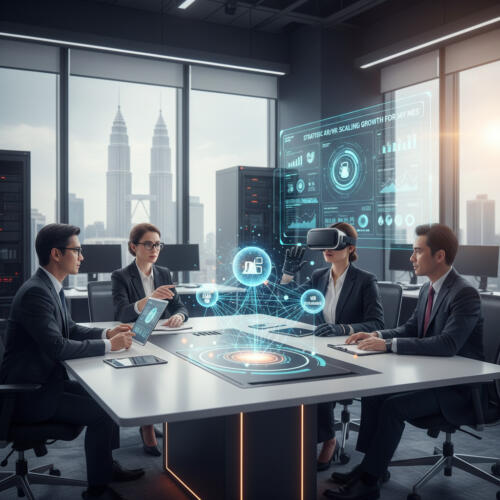
Imagine needing to showcase a complex piece of machinery to a potential client in Sarawak, while your showroom is in Johor Bahru. The logistics, the cost, the time – it’s often prohibitive, even for a high-value sale. But what if you could bring that machinery, in full detail and interactivity, directly to their office, anywhere in Malaysia, without ever shipping it? This isn’t science fiction; it’s the practical application of Augmented and Virtual Reality (AR/VR) that growing businesses are increasingly leveraging to solve real-world problems and drive tangible value.
For years, AR/VR felt like a distant future, confined to gaming or niche industrial applications. Today, the landscape has fundamentally shifted. For a growing Malaysian business, AR/VR isn’t just about novelty; it’s a strategic tool addressing critical operational and marketing challenges.
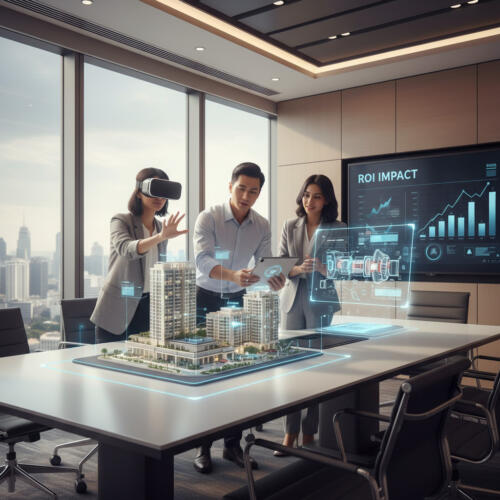
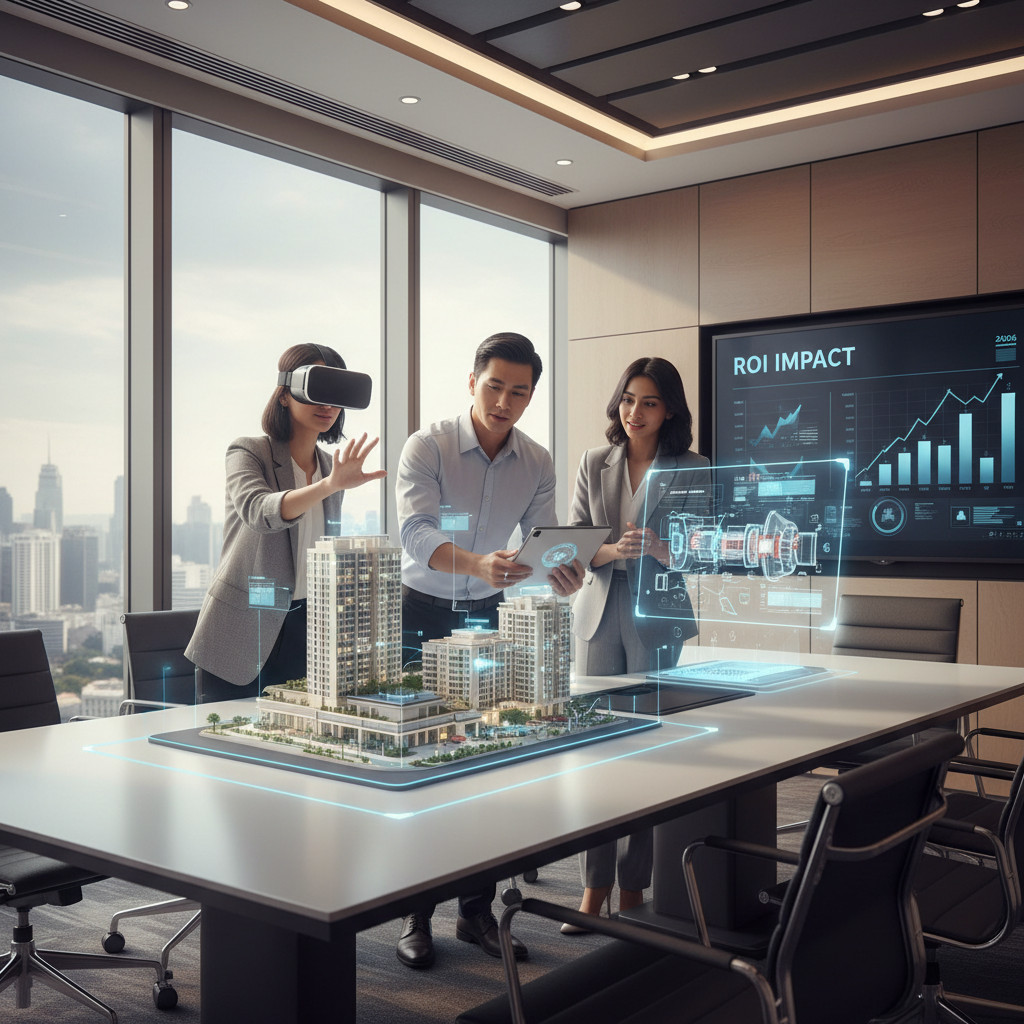
Consider a Malaysian property developer based in Kuala Lumpur, keen to attract international buyers or those from other states to a premium development in Langkawi. Traditionally, this requires costly travel, time-consuming site visits, and the buyer often only sees a show unit. With VR, prospective buyers can take a fully immersive, guided tour of an unbuilt property, walk through different floor plans, customise finishes in real-time, and experience the views from various units – all from the comfort of an office anywhere in the world. This not only broadens their market reach but also significantly reduces the sales cycle and associated travel expenses.
Beyond sales, AR/VR excels in training and complex product demonstration. A manufacturing firm that produces intricate medical devices, for instance, faces high costs and risks associated with training new technicians or demonstrating equipment to hospital staff. AR overlays can guide technicians step-by-step through assembly or maintenance procedures directly on the physical device, enhancing precision and reducing errors.
In customer service, AR apps allow customers to visualise products in their own space – reducing returns and increasing satisfaction. This directly complements strategies like social media ads and performance marketing, where engagement and conversion are key.
While the potential of AR/VR is immense, many businesses stumble in their initial adoption.
One of the most common pitfalls is adopting AR/VR for novelty instead of utility. Without solving a real business problem, it becomes a gimmick rather than a strategic investment.
Another mistake is underestimating content creation costs. High-quality 3D assets and immersive environments require expertise. Businesses often invest in hardware but neglect the content, resulting in poor user experience. This is why working with experts in 3D rendering or animated videos is crucial.
Many also overlook user experience and integration. A clunky system or lack of integration with platforms like CRM or websites can render the entire effort ineffective. Strong foundations such as website development and website maintenance are essential.
Finally, lack of clear KPIs and strategy leads to failure. Without measurable outcomes and integration into workflows, AR/VR becomes an isolated experiment.
The combination of AR/VR and AI significantly improves ROI.
AI enables personalisation at scale, such as adaptive training or customised product recommendations. This is often part of advanced AI-driven strategies.
AI also improves content generation, reducing costs through automation of 3D assets and environments.
Additionally, AI enhances data insights, helping businesses refine strategies such as SEO and digital campaigns.
The clearest signal is having a clear business problem that traditional methods cannot solve efficiently.
Secondly, you need executive buy-in and an internal champion to drive the initiative.
You must also allocate budget for both technology and content, including areas like videography, photography, and immersive assets.
A willingness to experiment is crucial, as AR/VR requires iteration and optimisation.
Finally, access to expertise matters. Many businesses succeed by working with a digital marketing agency that understands both traditional and emerging technologies.
The convergence of AR, VR, and AI is reshaping how businesses operate and engage customers. By taking a strategic approach, focusing on real problems, and integrating the right expertise, businesses in Malaysia can unlock powerful growth opportunities through immersive technology.
Disclaimer: This blog post provides general information and does not constitute professional advice. Specific business needs should always be reviewed with qualified experts.
353-3 Jalan C. Y. Choy,
10300 George Town,
Penang, Malaysia.
A-16-8 Tropicana Avenue,
No 12 Persiaran
Tropicana, PJU 3, 47410
Petaling Jaya, Selangor.
















 Singapore
 Australia